Driveway Cleaning in Katy, TX
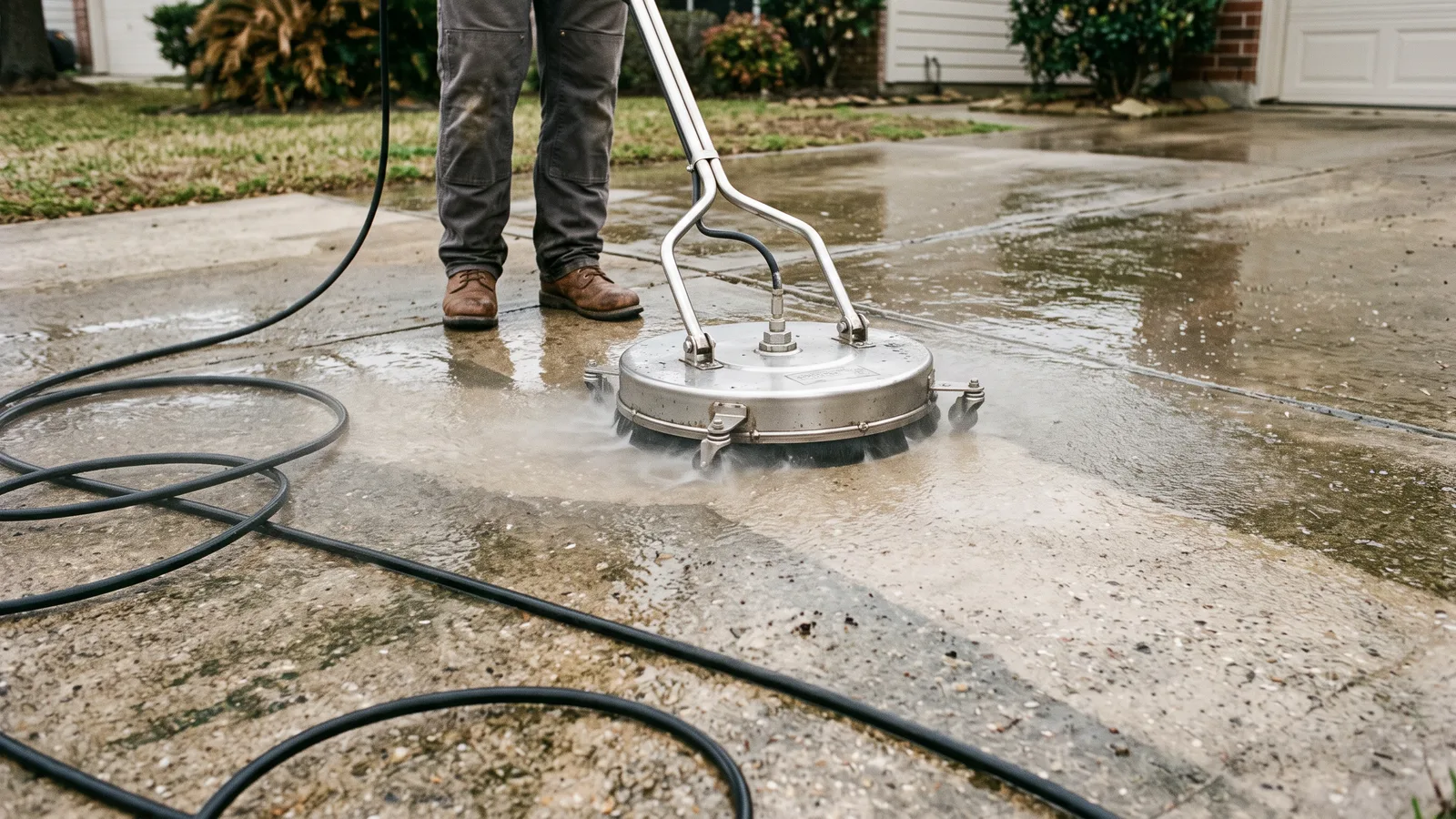
Oil spotting, rust, tire marking, and Fort Bend red clay pulled out of concrete with a surface cleaner, so the finish is even instead of striped.
- Fully Insured
- EPA-Approved Solutions
- Free Estimates
The driveway is the largest single surface most people see when they look at your house, and it is the one that shows neglect fastest. It is also the surface most commonly ruined by well-meaning DIY attempts, because a wand in untrained hands leaves permanent striping across the slab.
What driveway cleaning actually involves
Concrete gets pre-treated first: degreaser on oil spotting, a separate treatment for rust and clay, each given time to work. Then the slab is cleaned with a rotary surface cleaner rather than a wand, which is what produces an even finish edge to edge with no zebra striping. Edges, expansion joints, and the garage apron get detailed by hand afterward, because a surface cleaner cannot reach them. The final rinse carries everything off the slab rather than leaving a tide line at the bottom.
Why it matters
Concrete is porous, and everything that lands on it soaks in. Oil that sits for a season migrates deep enough that it can no longer be fully lifted. Red clay bonds into the pore structure. Organic growth holds moisture in the surface, which accelerates spalling and pitting through heat expansion. Cleaning on a regular cycle keeps staining at the surface where it can still be removed. Waiting turns a cleaning job into a resurfacing job.
Common signs you need it now
- Dark oil patches where vehicles habitually park
- Orange or red staining from sprinkler overspray or Fort Bend clay
- The concrete under the garage door is visibly lighter than the rest
- Black tire marking that no longer rinses off
- Green or slick film along the shaded edges
- Visible striping from a previous wand cleaning
What's included
- Full driveway and apron cleaning
- Oil and grease spot pre-treatment
- Rust and red clay stain treatment
- Sidewalks, walkways and entry paths
- Expansion joint and edge detailing
- Post-clean rinse and cleanup
Best for
- Concrete, exposed aggregate, and stamped drives
- Paver and brick driveways
- Properties with oil or rust staining
- HOA compliance and pre-sale prep
- Post-construction cleanup on new builds
- Annual maintenance in clay-heavy areas
How it works
Straightforward. No hidden fees, no bait-and-switch.
Assess + Pre-Treat
I identify each stain type, whether oil, rust, clay, or organic, and pre-treat with the right product, giving each the dwell time it needs before cleaning.
Surface Clean
A rotary surface cleaner covers the slab evenly at consistent pressure. This is what produces a uniform finish instead of the wand striping you see on DIY jobs.
Detail + Rinse
Edges, joints, and the garage apron are detailed by hand, then the whole surface is rinsed so nothing dries back onto the concrete.
One operator. Owner-run since 2018.
Anyone can rent a machine and point it at a driveway. The result is almost always visible striping, because a wand cleans in a narrow arc and the overlap shows permanently in concrete. A surface cleaner, correct pre-treatment, and the patience to let products dwell are what separate a cleaned driveway from a damaged one. I do the work myself and the slab gets the time it needs.
Driveway Cleaning questions.
Driveway Cleaning across Greater Houston
Ready for driveway cleaning?
Free, no-obligation quote, typically within a few hours.
Mon–Sat · 7AM – 6PM